

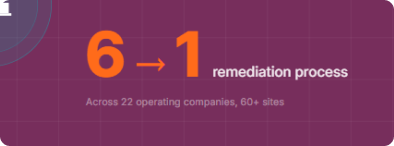
ThreatsView is an advanced Risk Operation Center that consolidates and analyzes risks from every facet of your enterprise. Beyond vulnerability management, it integrates data from GRC, VAPT, SLAs, internal scanning, DevSecOps, Incident Response/SOC platforms, ASM, and more—providing a unified, data-driven view of your enterprise’s risk and maturity status.

ThreatsView consolidates all vulnerabilities from SAST, DAST, network scanners, and penetration testing into a single hub enabling enterprises to prioritize and remediate the risks that matter most.
Consolidate all vulnerabilities from SAST, DAST, network scanners, and penetration testing into a single searchable platform, eliminating fragmented data across tools.
Assign risk ratings based on CVSS severity, exploitability, and business impact. Ensure teams remediate the vulnerabilities that pose the greatest actual risk.
Define SLA thresholds per severity level. Automated alerts notify stakeholders when deadlines approach, keeping remediation on schedule.
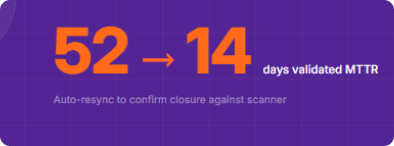
Assign ownership, create corrective action plans, and track remediation progress from identification through verified closure.

Create and manage penetration testing engagements from initiation to completion. Define scope, assign testers, and track activities in real time.
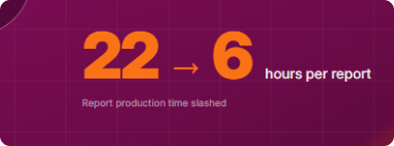
Generate professional reports instantly — executive summaries or technical details always presentable to management.
Onboard external security consultants with controlled access to upload findings directly into the platform, no more spreadsheets or Word documents.
Import pentest findings directly into vulnerability management. Findings are linked, prioritized, and tracked alongside scanner-sourced vulnerabilities end-to-end.
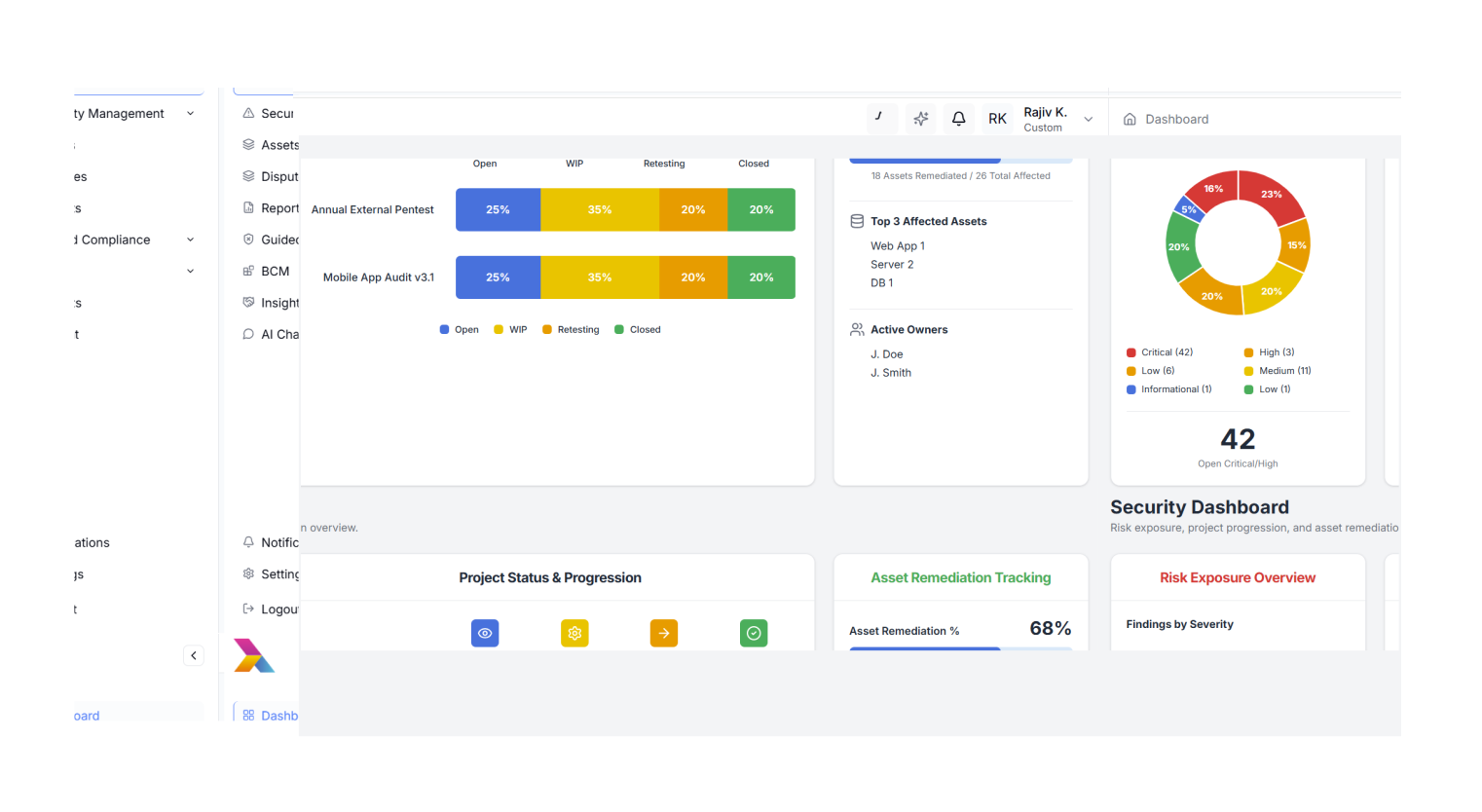
ThreatsView integrates data from Incident Response/SOC platforms to deliver a unified risk view. Connect CrowdStrike, Defender, Splunk, and more bringing incident intelligence directly into your Risk Operations Center.
Connect with CrowdStrike, Microsoft Defender, IBM QRadar, Splunk, and other SOC platforms to pull incident and alert data into a unified risk view.
Track security incidents from detection through containment, remediation, and post-incident review — with full auditability of every action taken.
Integrate threat intelligence feeds to enrich incidents and vulnerability findings with contextual data — helping teams assess urgency and prioritize response.






ThreatsView allows for meticulous asset management — categorizing assets by criticality, assigning owners, and linking each asset to its associated vulnerabilities, compliance requirements, and incidents.
Maintain a complete inventory of all information assets — IT, OT, cloud, and application — categorized by type, owner, and criticality tier. (connected through CMDB or 1 time manual upload)
Asset owners mapped alongside their assets. When vulnerabilities are identified on their systems, owners receive automated alerts to facilitate swift remediation.
Categorize assets by criticality so that vulnerabilities affecting high-value systems are automatically escalated and prioritized for faster remediation.
Every asset is linked to its associated vulnerabilities, compliance requirements, and incident history providing a complete risk profile for each system.


ThreatsView operates as a centralized Risk Operation Center by aggregating risk data from multiple sources, It then correlates
and prioritizes this data to deliver actionable, real-time risk intelligence
and a comprehensive maturity analysis of your enterprise.


Features an intuitive dashboard that displays real-time data and insights, aiding in quick decision-making and ongoing monitoring of cybersecurity health.

By prioritizing vulnerabilities based on their criticality, ThreatsView ensures that resources are focused on the most pressing security issues.

Centralizes the tracking and prioritization of vulnerabilities from various sources, providing a holistic view of security threats.

By providing detailed insights into vulnerabilities and asset criticality, it aids organizations in proactively strengthening their cybersecurity defenses
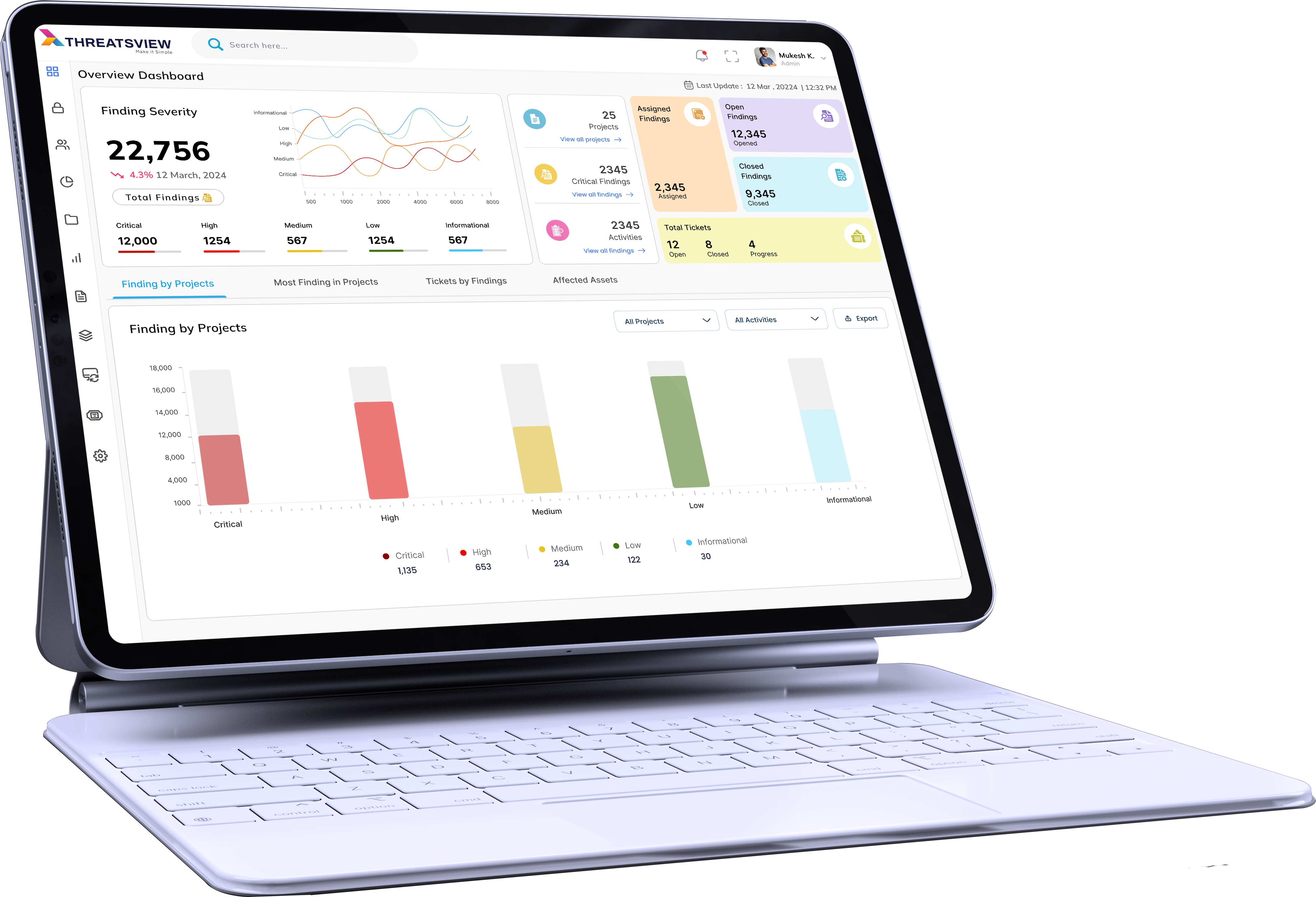
 Unified Vulnerability Lifecycle and Incident Management
Risk-Based Prioritization driven by Business Asset Criticality
Automated Remediation Workflows with Real-Time SLA Tracking
Seamless Multi-Framework Compliance via a Unified Interface
Perform Once, Comply Many Crosswalk Engine for Regulatory Efficiency
Continuous Control Monitoring (CCM) - "Always-On" Audit Readiness
End-to-End Penetration Testing & Security Operations
Seamless Technical Finding-to-Risk & Control Mapping
Unified Vulnerability Lifecycle and Incident Management
Risk-Based Prioritization driven by Business Asset Criticality
Automated Remediation Workflows with Real-Time SLA Tracking
Seamless Multi-Framework Compliance via a Unified Interface
Perform Once, Comply Many Crosswalk Engine for Regulatory Efficiency
Continuous Control Monitoring (CCM) - "Always-On" Audit Readiness
End-to-End Penetration Testing & Security Operations
Seamless Technical Finding-to-Risk & Control Mapping


Frequently Asked Questions
While a SOC focuses on real-time threat detection and incident response (the "firefighting"), a Risk Operations Center (ROC) focuses on the strategic management of exposure. ThreatsView’s ROC approach consolidates vulnerability data, penetration testing results, and GRC requirements into a single pane of glass, allowing you to prioritize remediation based on business impact rather than just CVSS scores.
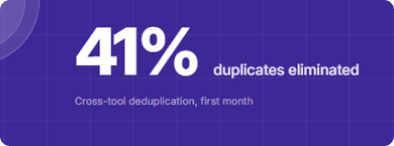
ThreatsView is vendor-agnostic. We act as a centralized orchestration layer that ingests findings from cloud security tools (CSPM), container security, and traditional infrastructure scanners. We normalize this data to eliminate duplicates and provide a unified view of your entire attack surface—from on-premise SCADA/OT environments to modern cloud workloads.
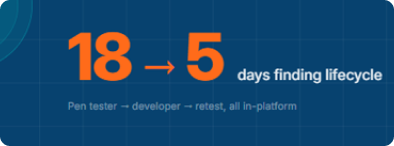
Absolutely. One of our core differentiators is the ability to manage Penetration Testing Projects. You can upload manual findings, assign asset owners, track "Work in Progress" (WIP) status, and manage the retesting lifecycle directly within the platform. This ensures that "one-off" security assessments don't get lost in PDF reports and are tracked until closure.
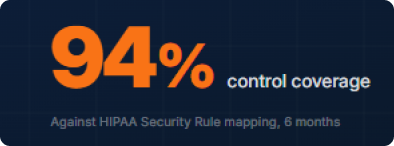
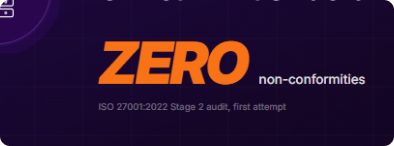
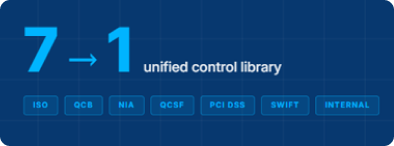
ThreatsView is built with the GCC regulatory landscape in mind. We provide pre-mapped templates for UAE Information Assurance (IA), PCI DSS, ISO 27001, and local data protection laws (PDPL). By linking your technical vulnerabilities to specific GRC controls, you can generate "Audit-Ready" reports that show regulators exactly how you are meeting compliance requirements.
Yes. Our platform is designed to handle the complexities of Operational Technology (OT) security. We allow you to categorize assets based on the Purdue Model hierarchy, ensuring that visibility into Level 0-3 (sensors, PLCs, and SCADA) is maintained without compromising the stability of sensitive industrial control systems.
Instead of giving your team a list of 10,000 "Critical" vulnerabilities, ThreatsView uses Risk-Based Prioritization. We correlate vulnerability severity with Asset Criticality and Threat Intelligence. This narrows your focus down to the 2-3% of vulnerabilities that are actually exploitable and reside on your "Crown Jewel" assets, significantly reducing MTTR (Mean Time to Remediate).
Yes. We provide high-level Risk Exposure Overviews designed for CISOs and Board members. These dashboards translate technical jargon into business risk metrics, such as "Remediation Progression," "Compliance Maturity Scores," and "Top Affected Business Units," making it easy to justify security investments.
Understanding the data residency requirements in the region, ThreatsView offers flexible deployment models. We support SaaS for agility, as well as On-Premise or Local Cloud deployments for government and critical infrastructure entities that must keep their security metadata within UAE borders.
ThreatsView is sold exclusively through authorised reseller partners. Your partner manages the commercial relationship, the implementation, day-to-day support, and account management. ThreatsView works closely alongside your partner throughout the engagement, particularly for government and regulated financial sector deployments where ThreatsView may co-present on technical, regulatory, or data sovereignty matters. If you are interested in exploring ThreatsView for your organisation and do not yet have a partner contact, you can reach us directly at [email protected] and we will connect you with the right authorised partner for your region.
Your data is yours. Upon the expiry or termination of your subscription, ThreatsView will, at your election, export all your data in a machine-readable format for you to retain, or securely delete it from all systems and provide you with written certification of that deletion. For on-premises deployments, your data remains on your own infrastructure throughout and you manage it directly. You are not locked in to the Platform as a dependency for your data.
No. ThreatsView is not a replacement for any existing tool in your security stack. It connects to the tools you already use via API and acts as the operational layer above them. Your scanners continue to run as they do today. Your EDR and ransomware protection continue to operate independently. ThreatsView ingests their findings and alerts, deduplicates and prioritises them, and gives your team and your CISO a single managed view of what actually needs attention. The value is in consolidation and operational clarity, not replacement.

See how ThreatsView can transform your cybersecurity operations by providing a unified, data-driven risk management solution.
 Vulnerability Management
 Pen Testing Project Management
  Incident Management & SOC Connector
 Asset Management